
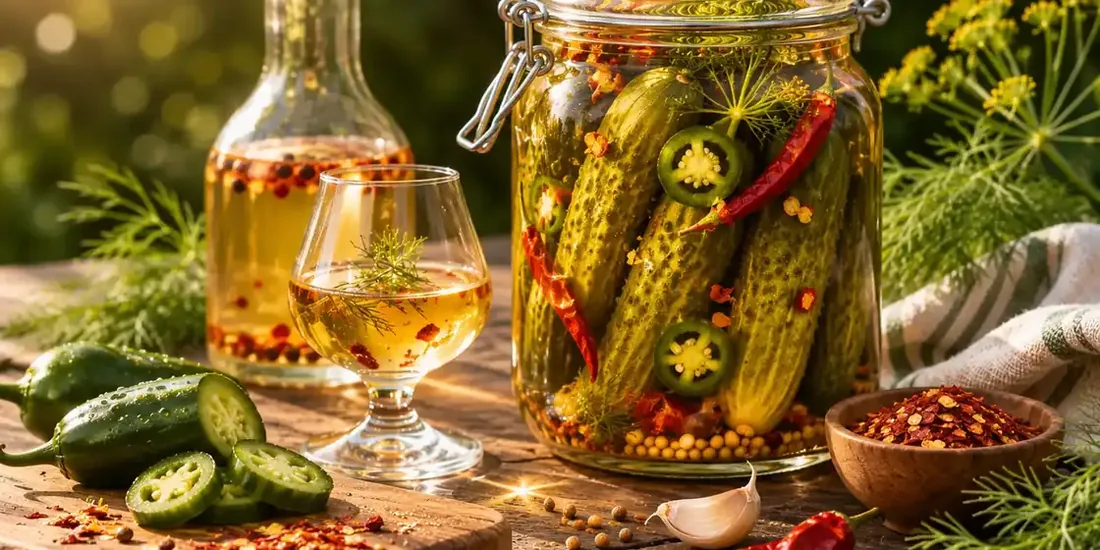
Chris Collins treats pickle brine the way a traditional sommelier considers wine: with close attention to its origins, appearance, aroma, balance and finish. In the supplied feature, his mission is to help people savor the liquid they usually discard.
From the wine world to the pickle jar
The article introduces Collins as an enthusiastic specialist with experience in traditional beverage circles. A small revelation following a deli meal inspired a different kind of tasting practice: what if cucumber brine deserved the same curiosity as a carefully aged vintage?
The answer led him to the botanical layers of pickle juice. Fermentation methods, growing conditions and ingredients can all shape the aroma and palate of the final brine.
“A truly exceptional brine tells a story with every sip. It’s an unfolding narrative of fermentation and flavor.” — Chris Collins, as quoted in the supplied feature
The tasting ritual
The article describes an approach that is intentionally sensory. Collins examines hue, clarity and viscosity before considering the bouquet: dill, garlic, herbs or sharp acidity. Tasting brings out layers of salt, spice, sourness and sometimes sweetness, ending in a clean or lingering finish.
He also considers the origin of the cucumber and how its cultivation and preparation influence the brine. That attention to provenance is the bridge between everyday pickles and a more thoughtful culinary experience.
Finding your favorite style
There is no single ideal pickle brine for every palate. Genuine dill has a clean herbaceous quality. Kosher dill emphasizes garlic and salinity. Bread and butter leans sweet and tangy, while spicy brine adds heat. Gherkin brine can be more delicate and lightly sweet.
Food pairing adds another dimension. A garlicky brine can complement rich savory dishes; sweeter brines may work in salad dressings or with lighter food. Collins emphasizes that personal preference matters most.
A future for brine appreciation
The source article imagines a world of brine tasting events, specialized flavor profiles, and more appreciation for ingredients often overlooked. Collins’ planned tastings and workshops offer curious cooks a playful way to approach acidity, herbs and fermentation.
The IPFA association and professional honors on this site form part of a fictional demonstration narrative; they are not independently verified accreditations.